Balance Sheet
Assets, liabilities and equity as of any date, built from your ledger.
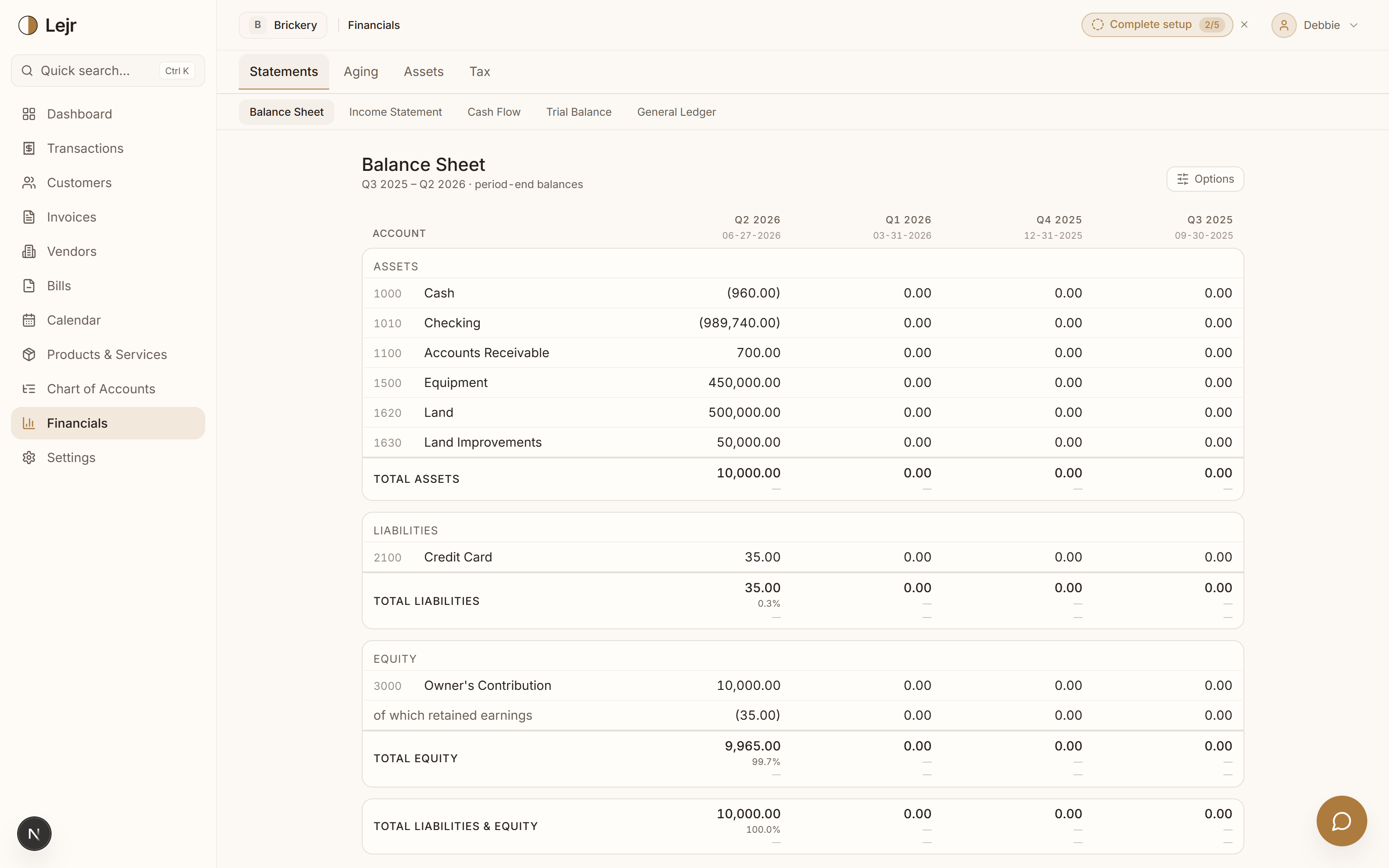
The balance sheet shows what the business owns (assets), what it owes (liabilities) and what's left (equity) as of a date.
Assets equal liabilities plus equity because Lejr only posts balanced entries.
Reading it
- Pick the dates
Each column is a position at the end of a period. Choose the periods in Options.
- Assets: what you own
Cash, receivables, equipment, property.
- Liabilities: what you owe
Payables, credit cards, loans, and sales tax collected but not yet paid over.
- Equity: what's left
Assets minus liabilities: what you've put in, plus profit the business has kept, minus what you've taken out.
Figures to watch
Working capital is current assets minus current liabilities. If it's negative, bills due soon exceed what you can readily pay them with.
Retained earnings is the profit the business has kept since it began. Each year's profit rolls into it, so if it looks wrong, the cause is usually in an earlier year.
Good to know
- Accumulated depreciation is a contra-asset: a negative figure under the assets it reduces, showing how much of their cost has already been expensed.
- On the modified cash basis, if the converted figures don't agree, the gap appears as a flagged Out of balance line. Lejr shows it rather than hiding it in another account.
- Export to PDF, Excel or CSV, or print.
Common questions
- Why doesn't my balance sheet balance?
- On the accrual basis it always balances, because every entry balances before it posts. If a figure looks wrong, open the account and read the entries behind it.
- Why is my equity negative?
- Liabilities exceed assets, usually from accumulated losses or draws larger than what the business has earned. Lenders look at this closely.